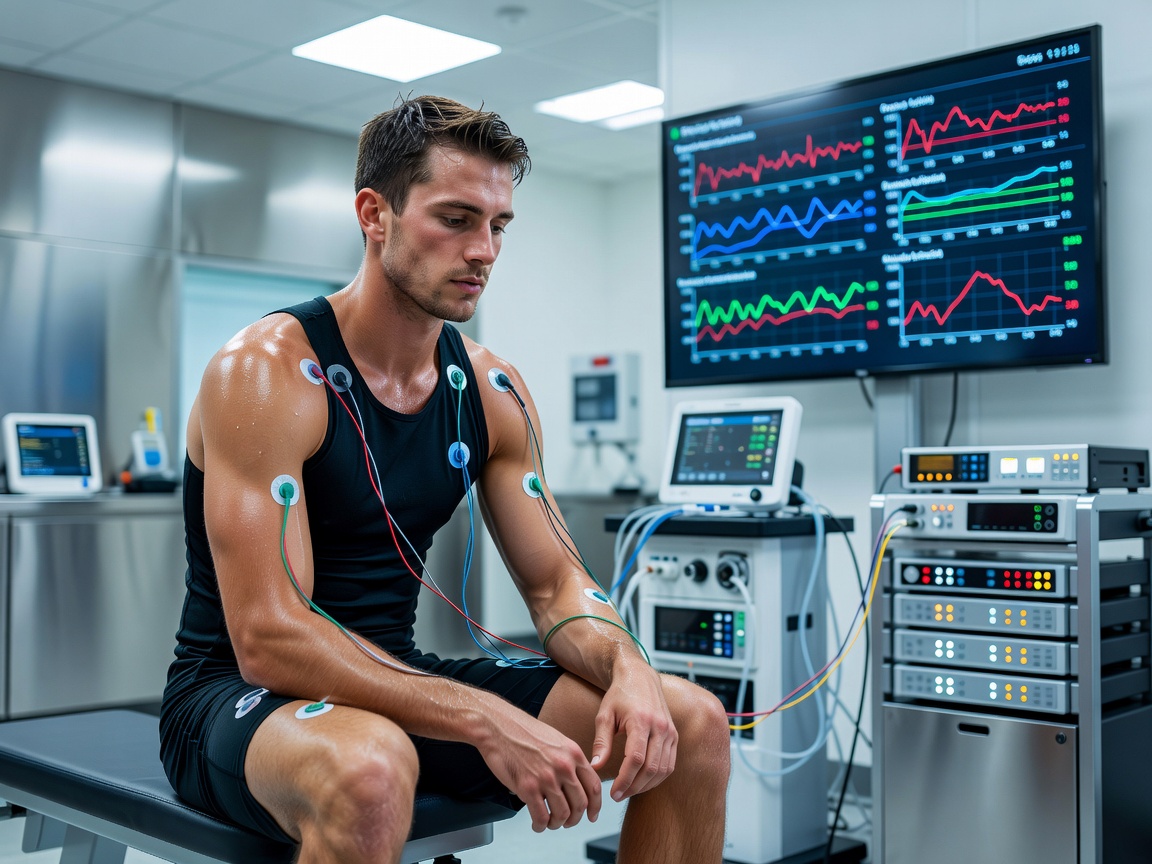
1. Dissecting Central vs Peripheral Fatigue
While peripheral fatigue manifests as localized glycogen depletion, intracellular acidosis, and excitation-contraction uncoupling in muscle tissue, Central Nervous System (CNS) fatigue represents a fundamental decrement in the voluntary drive originating from the motor cortex to alpha motor neurons.
When an athlete performs repeated maximal sprinting or supramaximal eccentric resistance training, serotonin (5-HT) synthesis in the brain increases relative to dopamine, reducing motivation, motor unit recruitment thresholds, and maximal firing frequency.
2. Thermal Contrast Modality Protocols
Contrast water therapy (CWT) accelerates the clearing of metabolic waste through rhythmic vasodilation and vasoconstriction without blunting the hypertrophic signaling cascade when programmed correctly.
The Standard Protocol:
- Cold Immersion: 10°C – 12°C for 2 minutes (Submerged to the clavicle).
- Hot Immersion: 38°C – 40°C for 3 minutes.
- Cycles: Repeat for 3 to 4 total rotations, always finishing on cold to downregulate inflammatory cytokines and promote post-session parasympathetic tone.
3. Sleep Architecture & Slow-Wave Sleep (SWS)
More than 95% of daily endogenous Human Growth Hormone (hGH) pulsatile release occurs during deep Stage 3/4 Non-REM Slow-Wave Sleep. To optimize slow-wave duration:
1. Core Body Temperature Depressurization: Ambient room temperature should be maintained strictly at 17°C – 19°C (63°F – 66°F).
2. Light Spectrum Attenuation: Complete elimination of >450nm wavelength (blue) light 90 minutes prior to anticipated sleep onset to enable melatonin synthesis.
3. Nutritional Precursors: Supplementation with 400mg Magnesium Bisglycinate and 3g L-Glycine 45 minutes prior to sleep onset to lower core body temperature through peripheral vasodilation.